Quick Answer
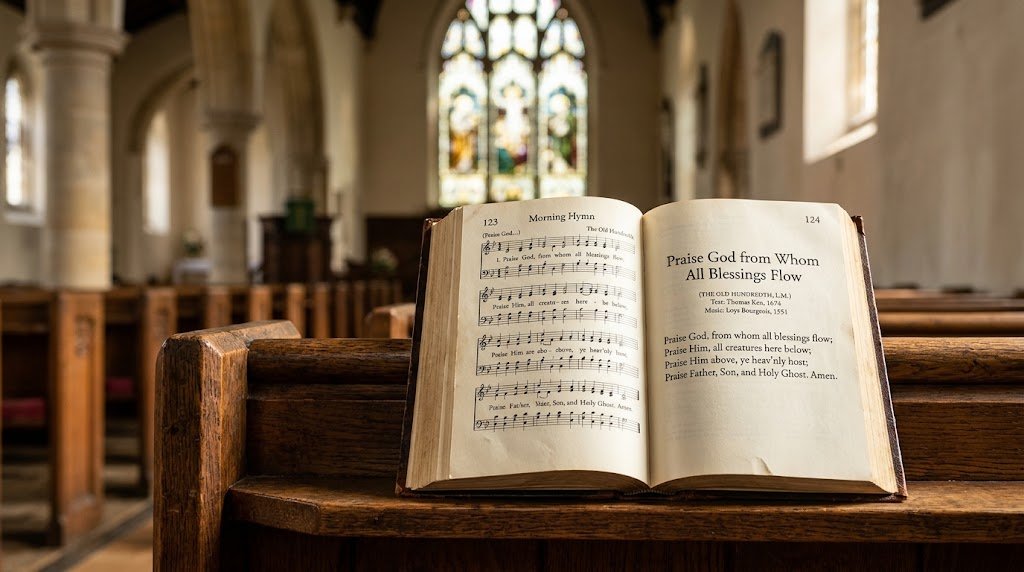
“Praise God from Whom All Blessings Flow” is a traditional Christian hymn known as the Doxology. Written by Bishop Thomas Ken, it praises God as the source of blessings and celebrates the Father, Son, and Holy Spirit. The traditional text is commonly sung to the tune OLD HUNDREDTH.
Some hymns have a way of bringing an entire congregation together in just a few lines. Praise God from Whom All Blessings Flow is one of those timeless Christian hymns. Often called the Doxology, it expresses gratitude to God and invites all creation to offer praise.
Whether you remember singing it in church, hearing it during a Sunday service, or learning it as part of your Christian faith, this short hymn carries a powerful message. Its words celebrate God as the source of every blessing and honor the Father, Son, and Holy Spirit.
In this guide, you’ll discover the traditional lyrics, the meaning behind the hymn, its history, the author and composer, its role in worship, and helpful answers to common questions.
Praise God from Whom All Blessings Flow Lyrics
The traditional four-line version of this hymn is a familiar expression of Christian praise. The historic text is in the public domain. <Cite refs={[“turn400124search5″,”turn400124search15”]}/>
Praise God, from whom all blessings flow;
Praise Him, all creatures here below;
Praise Him above, ye heavenly host;
Praise Father, Son, and Holy Ghost.
Amen.
These words are short, but they express a complete act of worship. They acknowledge God as the source of blessings, call upon creation to praise Him, and conclude by honoring the Trinity.
What Is the Doxology?
The Doxology is a brief expression of praise and glory to God. The word comes from Greek roots associated with glory and speaking or expressing, and it is used in Christian worship for statements that give honor to God.
The hymn beginning “Praise God, from whom all blessings flow” is among the best-known English doxologies. It is frequently sung by congregations as part of a worship service. <Cite refs={[“turn400124search0″,”turn400124search5”]}/>
- Purpose: To express praise and gratitude to God.
- Theme: God’s blessings and the worship of the Trinity.
- Setting: Church services, communal worship, and devotional gatherings.
- Style: A short, memorable hymn that a congregation can sing together.
Meaning of Praise God from Whom All Blessings Flow
The hymn reminds Christians to recognize God as the source of their blessings and to respond with gratitude and worship. Each line adds a part to that message.
- God as the source of blessings: The opening line directs gratitude toward God.
- Praise on earth: The second line calls all earthly creatures to honor God.
- Praise in heaven: The third line expands the image of worship to the heavenly host.
- The Holy Trinity: The final line honors the Father, Son, and Holy Spirit.
Together, these ideas present praise as something larger than an individual act. The hymn imagines all creation joining in worship and gratitude. <Cite refs={[“turn400124search0″,”turn400124search4”]}/>
Who Wrote Praise God from Whom All Blessings Flow?
The traditional text was written by Thomas Ken (1637–1711), an English bishop and hymn writer. He served in the Church of England and is remembered for his devotional writing, including hymns intended for morning and evening prayer. <Cite refs={[“turn400124search0″,”turn400124search5”]}/>
- Author: Thomas Ken
- Period: Seventeenth century
- Known title: The Doxology
- Religious tradition: Anglican Christian worship
- Legacy: A short text that became widely used in Christian congregations
Ken’s writing reflects a devotional approach centered on prayer, praise, and a regular awareness of God’s presence.
History and Background of the Doxology
The hymn’s history reaches back to the seventeenth century. Its text is associated with Thomas Ken’s devotional hymns, written for use by students at Winchester College in England.
The Doxology is commonly associated with the concluding verses of Ken’s morning and evening hymns. It later came to be used independently as a short hymn of praise. <Cite refs={[“turn400124search0″,”turn400124search6″,”turn400124search7”]}/>
- Early association: Ken’s devotional hymns for morning and evening.
- Publication history: The hymns appeared in editions of his prayer manual.
- Later use: The Doxology became a standalone expression of praise.
- Modern legacy: Churches continue to sing it in a variety of worship traditions.
Its lasting popularity comes partly from its brevity. Congregations can learn the words easily, while the message remains rich enough for reflection.
The Tune and Musical Style
The traditional tune associated with the hymn is OLD HUNDREDTH, a historic melody connected with the Genevan Psalter. The tune is often attributed to Louis Bourgeois and dates to the sixteenth-century Reformation era. <Cite refs={[“turn400124search5″,”turn400124search7″,”turn400124search15”]}/>
- Traditional tune: OLD HUNDREDTH
- Musical character: Formal, steady, and suitable for congregational singing.
- Common accompaniment: Organ, piano, or a church choir.
- Worship setting: Congregational singing, offertory moments, and services of praise.
Different churches may use alternative musical settings. The words can remain familiar even when the arrangement changes.
Biblical Connections
The Doxology’s message connects with biblical themes of praise, gratitude, and God’s blessings. The hymn is not itself a Bible passage, but its language reflects ideas found throughout Scripture.
- Psalm 150: Calls for praise to God.
- Psalm 148: Invites the heavens and the earth to praise the Lord.
- James 1:17: Describes good and perfect gifts as coming from above.
- Ephesians 1:3: Speaks of spiritual blessings in Christ.
These passages offer useful reading for people who want to reflect more deeply on the hymn’s meaning. The Church of Jesus Christ of Latter-day Saints’ official hymn entry also lists biblical references associated with the song. <Cite refs={[“turn400124search15″,”turn400124search4”]}/>
Why Churches Sing This Hymn
Churches use the Doxology because it provides a concise way for the congregation to express shared gratitude and worship.
- Shared worship: Everyone can participate in the same words.
- Thanksgiving: The hymn directs attention toward God’s blessings.
- Unity: Singing together creates a shared moment of praise.
- Tradition: Many congregations have included it in their worship practices for generations.
- Simplicity: Its short text makes it easy to remember.
Some churches sing it after an offering, while others include it at different points in a service. The exact placement depends on the congregation’s tradition and order of worship. <Cite refs={[“turn400124search0″,”turn400124search4”]}/>
How to Use the Doxology in Worship
The hymn can fit into several worship settings, depending on the congregation’s practice.
- Sunday worship: Sing it as a congregational hymn.
- Offering time: Use it as a response of gratitude.
- Prayer gatherings: Include it as a short communal expression of praise.
- Family devotion: Read the words together and discuss their meaning.
- Choir arrangements: Perform a traditional or appropriately licensed musical setting.
When using the hymn in a service, check the rights for the specific musical arrangement, recording, or adaptation you plan to use. The traditional text and historic tune are public domain, but a modern arrangement may have separate copyright protection.
Common Variations of the Hymn
The familiar traditional text is only one way congregations encounter the Doxology. Different hymnals and churches may use distinct tunes, arrangements, or adaptations.
- Traditional Doxology: The familiar four-line text by Thomas Ken.
- OLD HUNDREDTH setting: The classic tune associated with the hymn.
- New Doxology: A different musical setting that may use a gospel-influenced style.
- Adapted texts: Some versions change wording or emphasize particular theological themes.
Always check the hymn title, author, tune, and copyright notes in the hymnal or official source. A version with a similar title may contain different words or a newer adaptation. <Cite refs={[“turn400124search4″,”turn400124search1″,”turn400124search10”]}/>
How to Reflect on the Doxology Personally
You can use the hymn as a short devotional reminder during an ordinary day.
- Begin with gratitude: Think of one blessing you appreciate.
- Reflect on creation: Notice the natural world around you.
- Consider the Trinity: Reflect on the Father, Son, and Holy Spirit according to your Christian tradition.
- Practice humility: Remember that gratitude includes recognizing help received from others.
- End with praise: Use the hymn’s message as a prompt for personal prayer.
The purpose isn’t to make every moment perfect. Instead, the hymn can remind you to pause and direct your attention toward gratitude and worship.
FAQs
What are the lyrics to Praise God from Whom All Blessings Flow?
The traditional hymn begins with a line praising God as the source of all blessings. The traditional text is available through public-domain hymn resources.
Who wrote Praise God from Whom All Blessings Flow?
Thomas Ken, an English bishop and hymn writer who lived from 1637 to 1711, wrote the traditional text. It is widely known as the Doxology. <Cite refs={[“turn400124search0″,”turn400124search5”]}/>
What does the Doxology mean?
The Doxology is an expression of praise and glory to God. This particular hymn emphasizes gratitude for God’s blessings and calls all creation to worship Him.
What tune is used for the Doxology?
The traditional tune is OLD HUNDREDTH, associated with the Genevan Psalter and commonly attributed to Louis Bourgeois. Other musical settings also exist. <Cite refs={[“turn400124search5″,”turn400124search7”]}/>
Is Praise God from Whom All Blessings Flow a Bible verse?
No. It is a Christian hymn rather than a direct Bible verse. However, its themes connect with passages such as Psalm 150, Psalm 148, James 1:17, and Ephesians 1:3. <Cite refs={[“turn400124search15″,”turn400124search4”]}/>
Conclusion
“Praise God from Whom All Blessings Flow” remains a beloved Christian hymn because it expresses a lasting message in just a few lines. Written by Thomas Ken and traditionally sung to OLD HUNDREDTH, the Doxology celebrates God’s blessings and calls all creation to offer praise.
Whether you encounter it during Sunday worship, a family devotion, or a personal moment of reflection, its message encourages gratitude, humility, and faith.
Explore the related prayers, Bible verses, and Christian blessings on your website to continue reflecting on the meaning of worship and thanksgiving.
Discover More Related Articles:
